Layering rugs is not random styling. Designers use it to fix layout gaps, add depth, and make a space feel complete without changing furniture.
If you follow the right approach, even a basic room can look structured, warm, and well-designed.
TL;DR
-
Start with a large neutral base rug to anchor the space and support furniture placement
-
Add a smaller top rug with texture or pattern to create focus and depth
-
Mix textures like jute and wool to make the layering feel rich and comfortable
-
Keep a clear size difference so the base rug frames the top layer properly
-
Slightly offset the top rug and secure both layers to keep the setup natural and stable
Here’s a visual representation of the steps to layer your rugs like a professional interior designer:

What is rug layering?
Rug layering is a design technique where you place one rug on top of another to create depth, contrast, and better structure in a room.
Instead of relying on a single rug, you combine a larger base rug with a smaller top rug. The base rug usually anchors the space and connects furniture, while the top rug adds style through pattern, color, or texture.
This approach is often used by interior designers to fix common issues like rugs that feel too small, spaces that look flat, or rooms that lack visual interest. It also helps define specific areas in open layouts without adding walls or extra furniture.
When done correctly, rug layering makes a space feel more complete, comfortable, and intentionally designed rather than just decorated.
1. Start with a large base rug that anchors the room
The base rug defines your space. It should be large enough to sit under key furniture like sofas, beds, or dining tables.
In a living room, place it under the front legs of the seating. In a bedroom, it should extend beyond both sides of the bed. Choose neutral tones like beige, grey, or earthy textures so it does not overpower the room.
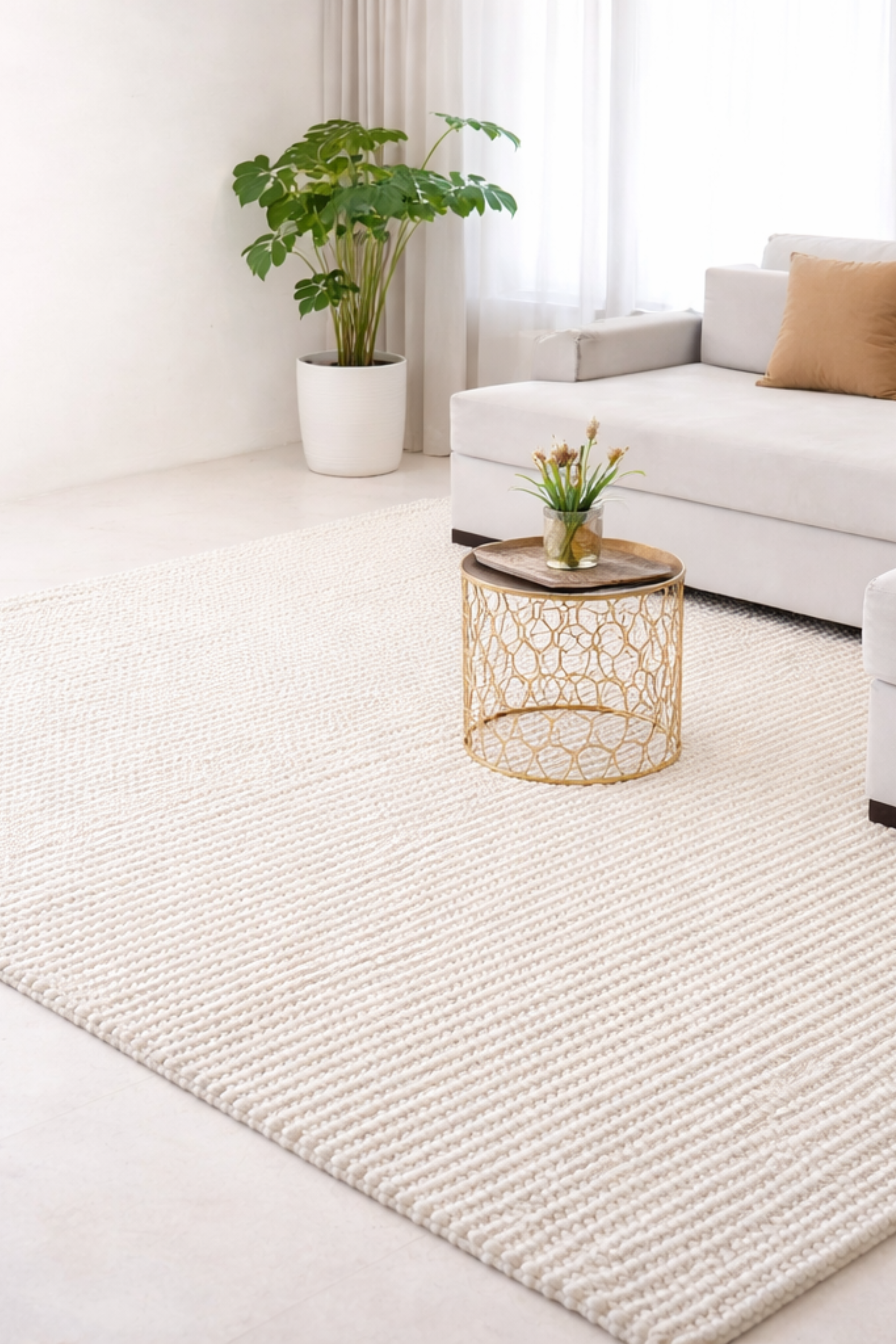
Materials like jute or flatweave wool work well because they stay stable and create a clean foundation. This base is not meant to stand out. Its job is to hold the entire layout together and make the room feel grounded.
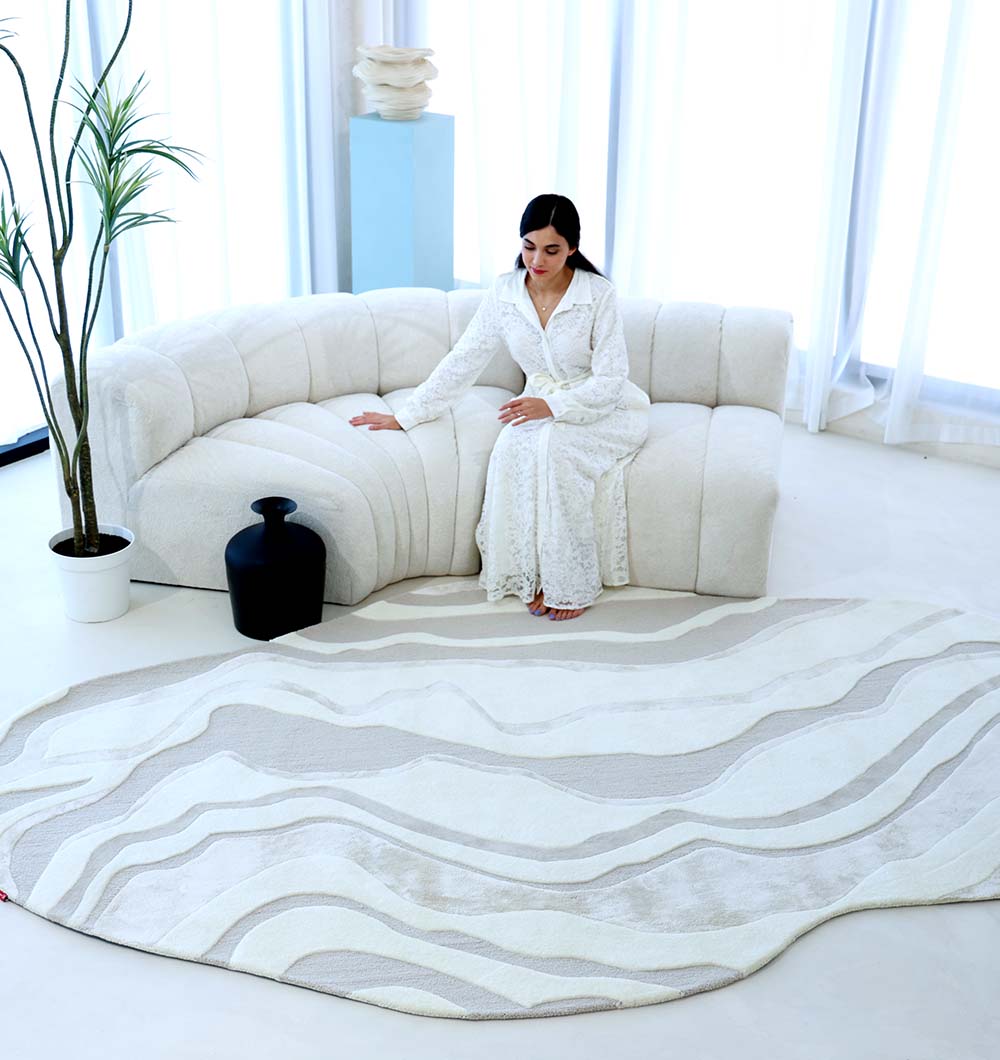
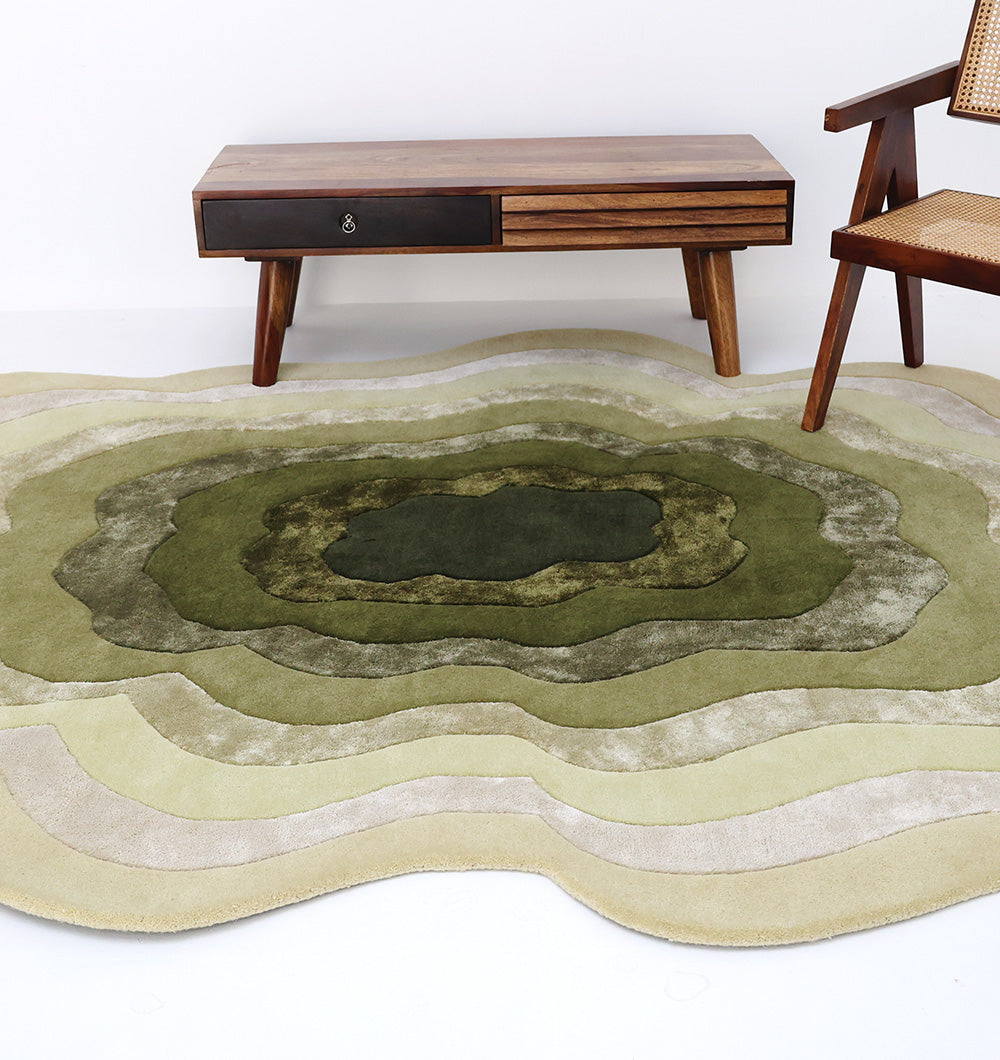
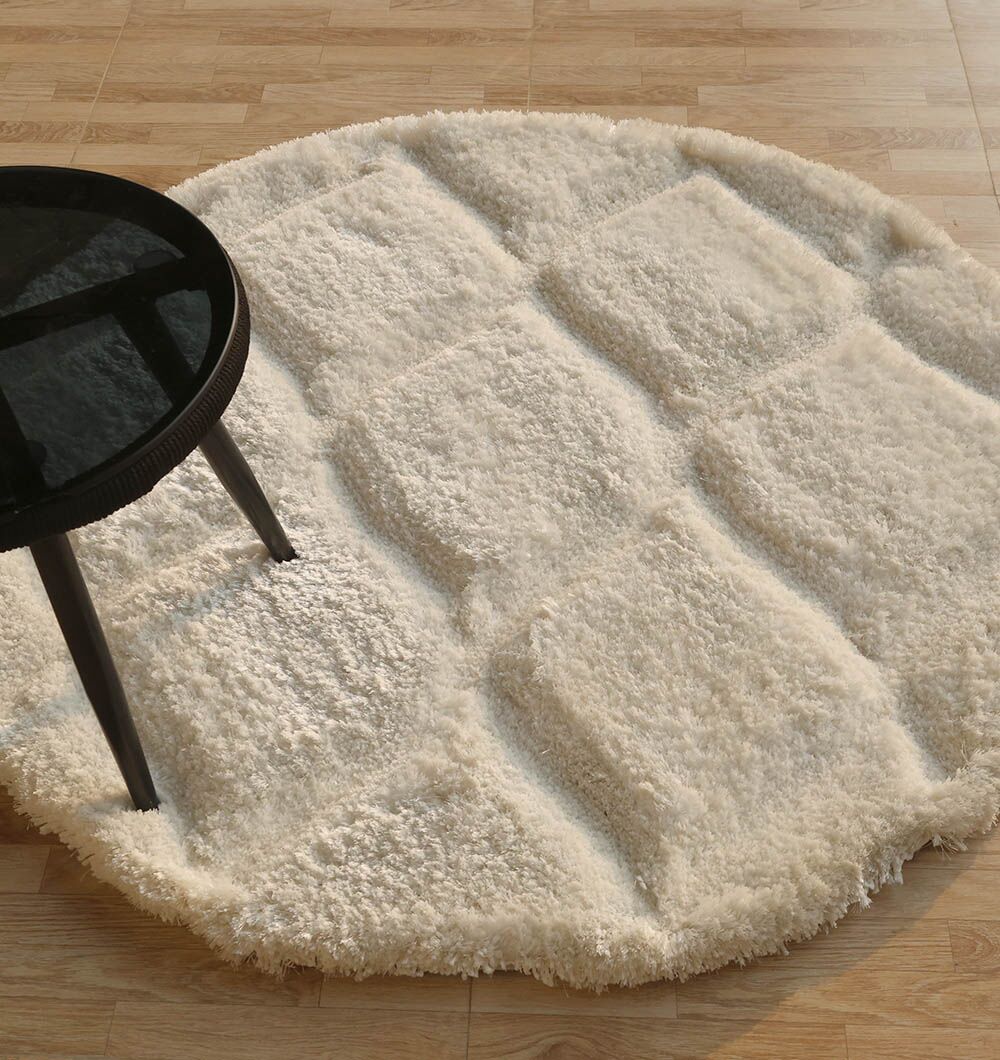
Here are some rug types to explore in the UAE:
2. Add a smaller top rug that brings focus
The top rug is where you introduce personality to your space. This layer should always be smaller so the base rug is visible around it.
Use this rug to add pattern, color, or a softer feel. Place it under a coffee table, slightly under a bed edge, or centered within the seating area. Do not try to align it perfectly with the base. The goal is to create contrast and highlight a specific zone. This top layer acts like a focal point, drawing attention while still working within the overall layout created by the base rug.
3. Mix textures to create depth you can feel
Texture is what makes layering look rich, not just color.
A flat rug alone can feel plain, but combining textures changes that instantly.
Pair something rough or flat like jute with a soft wool or shag rug. This creates a clear difference you can see and feel when you walk on it. Designers focus on this contrast because it adds warmth and comfort without making the room visually heavy. Even if both rugs are neutral, texture variation alone can make the setup feel more detailed and thoughtfully designed.
4. Keep clear proportions between both rugs
Proportion is what separates a clean layered look from a confusing one. The base rug should always be clearly larger than the top rug.
A simple rule is to keep the top rug around two thirds the size of the base. You should be able to see a clear border of the bottom rug on all sides. If both rugs are too close in size, the layering effect disappears. This balance creates a framed look that feels intentional and structured, which is exactly how designers approach layering in real spaces.
5. Use layering to fix a rug that feels too small
Many people struggle with rugs that look too small for their room. Instead of replacing it, layering offers a simple fix.
Place your existing rug on top of a larger neutral rug. This expands the visual coverage and makes the space feel complete. It also makes the smaller rug look intentional rather than misplaced. Designers often use this trick in rental homes or quick upgrades because it saves cost while improving the layout. It is one of the most practical uses of rug layering.
6. Balance patterns so the room does not feel busy
Patterns can quickly make or break a layered setup. If both rugs are bold, the room can feel cluttered and hard to look at.
A better approach is to let one rug stand out while the other stays simple. For example, use a patterned rug on top of a neutral base. This keeps the focus clear and avoids visual overload.
Designers often repeat one or two colors across both rugs to maintain consistency. This way, even when styles are different, the overall look still feels connected and easy on the eyes.
7. Place the top rug slightly off-center for a natural look
Perfect alignment often looks too staged. Designers avoid placing rugs exactly on top of each other.
Instead, they shift the top rug slightly to one side or angle it under a table. This creates a relaxed and natural feel.
It also helps highlight certain areas like a coffee table or reading corner. The slight offset adds movement to the space, making it feel more lived in rather than overly styled. This small adjustment can make a big difference in how the room looks.
8. Secure both layers to avoid movement and damage
Layered rugs can move, especially in high traffic areas in the UAE. This not only looks messy but can also be unsafe.
Always use a rug pad under the base rug to keep it stable. If needed, add a thin anti slip layer between both rugs. This keeps everything in place and prevents bunching or shifting. It also helps protect the rugs and extend their life. Designers always consider safety along with style, so securing your rugs properly is an important final step.
Final thought
Layering rugs is about control and balance. You are combining size, texture, and placement in a way that makes your space feel complete and comfortable.
Start simple with one base rug and one top rug. Once you understand how they work together, you can experiment with different styles and layouts.
If you are looking to try this in your home, exploring rugs collections from Ramsha Home can make the process easier. Their range of handmade, shaped, woven, and shaggy rugs gives you enough variety to mix textures and styles without guesswork.
Since you can explore their rugs online or visit their stores, you can choose what fits your space with more confidence.