The purchase of a rug for your home is not a small one. A good rug will last a living room or bedroom for 10, 20, even 30 years! If you're considering luxury handmade rugs, you're already picturing the long-term and you should be.
This guide covers everything you need to know before you purchase: How they're made, what certifications really mean, why natural dyes are worth the extra cost, when to buy a custom rug, and whether or not it's a good investment. We'll also discuss how to buy the right material for a shopper in the UAE as climate and room style will dictate this.
At the end of this course, you will know how to identify a luxury handmade rug, the questions to ask a seller, and what to look for.
What is "Luxury" in a Rug?
The three things that make a rug luxurious are the material, the craftsmanship and durability.
Luxury handmade rugs are created from natural fiber materials such as wool, silk, bamboo silk, jute or a mixture of these, not synthetic fiber materials like polypropylene. They are not machine-made in a few minutes in a factory but woven or knotted by hand. But they are designed to last for many years, not just a few.
A machine made rug can appear to be like a handmade rug in a picture. The difference is in how it feels on the feet, how it will retain its color over the years and how it will age. The true luxury handmade rug will develop a soft sheen and character with time. A machine-made rug is inexpensive and collapses, fades and loses fibers in a couple of years.
Price is a signal but not proof. If you're considering a rug that is described as luxury, it should be able to answer these three questions quite easily: What are the materials used to make it? How was it made? Who made it? If the seller is unable to answer all three, proceed with caution.
Read the blog on Aiba World: Handmade Rug Buying Guide 2026: All You Need to Know Before Buying a Rug |
How Are Luxury Handmade Rugs Made? (Craftsmanship Explained)
It's in this part where high quality handmade rugs become expensive. There are three major hand making methods, each of which requires a varying level of skill and time.
Hand-Knotted Rugs:
Hand-knotted carpets are handmade by tying individual knots, row by row, around the warp threads on a loom. Depending on the size and knot density of the rug, a skilled weaver can take weeks to years to create a single rug. The most labor intensive and the highest value rugs are made this way. One of the easiest methods to compare quality is by counting the number of knots per square inch - the more the better for finer detail and longer life.
Hand-Tufted Rugs:
Knotted rugs are quicker to produce, with a tufting gun pushing the yarn through a fabric backing and then a layer of latex is applied to stabilize the rug. Hand-tufted rugs are made using actual craftsmanship and hand work, but are less time intensive and less expensive than hand-knotted rugs. A good compromise between the machine-made rugs and hand-knitted rugs.
Hand-Loom Rugs and Flat Weaves Rugs:
The hand-loom carpets or flatweave rugs are woven on a loom, like fabric, without the use of knots. Typically, these are less expensive and less heavy, and they are suitable for informal or busy areas.
While you are shopping, inquire about the technique used, how long the rug was made and the location of the artisans. A brand that's proud of its craftsmanship will know the answer, and typically will have photographs or videos of the actual weaving process available.
Which Certifications to Check Out When Purchasing Top Quality Handmade Rugs?
There are two reasons why certifications are important: they provide assurance that the rug was made in a fair and safe way, and they are often indicative of higher quality control for the materials and construction.
The certifications to know:
GoodWeave Certification:
Guarantees that no child labor used in the rug's manufacturing and promotes fair wage for weavers. One of the most well-known handmade rug certifications.
Fair Trade Certification:
Guarantees fair wages and ethical working practices throughout the supply chain.
OEKO-TEX certification:
Guarantees that the rug is free of harmful substances and is safe for children and pets.
For wool rugs, check for wool quality marks, such as confirmation of the source of the wool, which is generally regarded as a benchmark for softness and durability, with a particular focus on New Zealand wool.
When asking questions, ask directly: "Is this rug certified? By whom? If a seller of authentic, high quality rugs is claiming that it is certified without any documentation, he or she is not a seller of genuine premium rugs. Certifications can also be useful to compare two rugs that are similar in price but from different brands, as the certified rug is likely to have more traceability and quality control.
Why Do Natural Dyes Matter in Premium Carpets?
Natural dyes are derived from plants, minerals and insects, rather than synthetic chemical dyes, such as indigo, madder root, pomegranate skin, walnut shells, etc. This has three practical implications.
Colour Depth and Ageing:
Handmade rugs are dyed with natural dyes, which create color variation within the same shade, adding depth and character to the rug. Synthetic dyes create a level and even tone that's less natural and will age out faster than natural dye tones, which will age beautifully.
Fade Resistance in Sunlight:
In fact, if well mordanted using traditional methods, good natural dyes can resist UV rays for decades. Some synthetic dyes may lose color in an uneven manner, particularly in a bright room or sunroom.
Health and Environmental Impact:
If you're purchasing for a home where there are children, pets, or individuals with sensitivities, natural dyes do not contain the heavy metals or chemical run-off that some synthetic dye processes do.
However, not all high quality rugs are made with natural dyes; some high quality rugs are made with high grade synthetic dyes that are specially formulated for consistency and colorfastness and this is a valid option as well. The important thing is that the seller can explain and communicate the dye process used and why.
Should You Choose a Custom Design Rug or a Ready-Made One?
This is all about your room, your budget and your time.
Choose a Custom If:
Your room is a weird shape or size, you have a color scheme to coordinate with existing furniture, walls or a designer's plan, or you want something that no one else will have. Custom design rugs allow you to select the size, shape, material, pile height, color scheme and pattern to create the rug that you want. The downside is the time it takes - a hand-knotted rug can take anywhere from two to six months or more to be finished - and the cost, which is usually more than a similar ready-made rug.
Choose a Ready-Made Rug If:
You can't wait to have a rug in your room, the room is a standard size, or you are on a medium budget. Even though the rugs are ready-made, they are still handmade and quality items - you are just picking a design that is already woven, not creating a new one.
A middle ground that many buyers are unaware of some manufacturers of rugs provide the option of a "semi-custom" rug, which is a rug that is designed from a pattern that the buyer chooses, but doesn't create from scratch. This is typically more expedient than an entirely custom rug, but more cost-effective than an off-the-shelf rug.
If you have an interior designer, get them involved in the custom process early, as they can assist in making your room idea into instructions for the artisans that can be executed.
Are Luxury Carpets a Good Investment?
Yes, with proper expectations. As with a well-made piece of furniture, luxury handmade rugs, especially hand-knotted rugs with wool or silk and natural dyes, appreciate or maintain their value over decades, while mass-market rugs immediately lose value.
There are three drivers of investment value:
Craftsmanship and Rarity:
As fewer artisans continue to make rugs with traditional methods, the rugs that are made are more difficult to replace, particularly if they are limited runs or custom pieces. This is a rarity that lends to long-term value.
Material Quality:
High grade wool and silk rugs are valuable, and synthetic or blended fiber rugs lose value rapidly and have little resale value.
Condition and Provenance:
A properly cared for rug (see below for how to care for a rug) with documentation of its origin, materials and maker will have much more resale and appraisal value than a rug that does not have documentation.
However, do not purchase a rug for investment purposes like you might buy gold or stocks, but rather for its love of the rug, knowing that a true antique or vintage rug is far from becoming a depreciating asset, and is in fact likely to appreciate, particularly in the antique and vintage rug market decades down the road.
Which Material is Best for Rugs and Carpets in UAE?
A strong air conditioning system, low humidity inside, dust and bright sunlight coming through big windows are all issues that UAE homes face, which can impact the choice of rug materials.
Wool:
The most practical all-round option for homes in the UAE. Dust and stain resistant, will not hold heat, warm underfoot and will not be adversely affected by the dry, air-conditioned indoor environment.
Bamboo Silk:
A luxurious look that is like real silk, but at an affordable price, suitable for lower traffic rooms such as a majlis or formal living room, as it is more delicate than wool.
Silk and Silk-Wool Blends:
Ideal for formal wear in less travelled spaces, silk is a gorgeous material but is more fragile and therefore should not be used in high-traffic hallways or under dining tables.
Jute:
A natural fibre that is breathable, suitable for casual areas but prone to spills and not recommended for very humid rooms.
Tencel:
A newer eco-friendly fiber that is soft, silk-like in texture and has a decent durability, it is worth considering if you are looking for a sustainable option as an alternative to silk.
Wool or wool-silk large rugs (250x350cm and bigger) are best suited to use in living and majlis areas, and bamboo silk or pure silk rugs are ideal for smaller accent rugs or formal-room rugs.
When it comes to carpet shopping in UAE, always ask if the seller offers a home trial, as it is one of the most beneficial ways to prevent a costly mistake when shopping for a rug in UAE's bright natural lighting versus in indoor lighting, particularly rich or dark colors that can look very different.
How Do You Choose the Right Size and Shape for Designer Rugs?
Don't begin with the size of the room alone; begin with your furniture layout:
Living Rooms:
The rug should be large enough so that at least the front legs of your sofa and chairs fit. If the rug is too small under the large sofa set, the entire room will seem disjointed.
Dining Rooms:
This rug should be long enough to cover at least 60-70cm over the edge of the table on all sides to prevent chairs sliding off when pulled out.
Bedrooms:
A rug should be at least 45-60cm outside the width of the bed so that your feet touch the rug when you get out of bed.
Size:
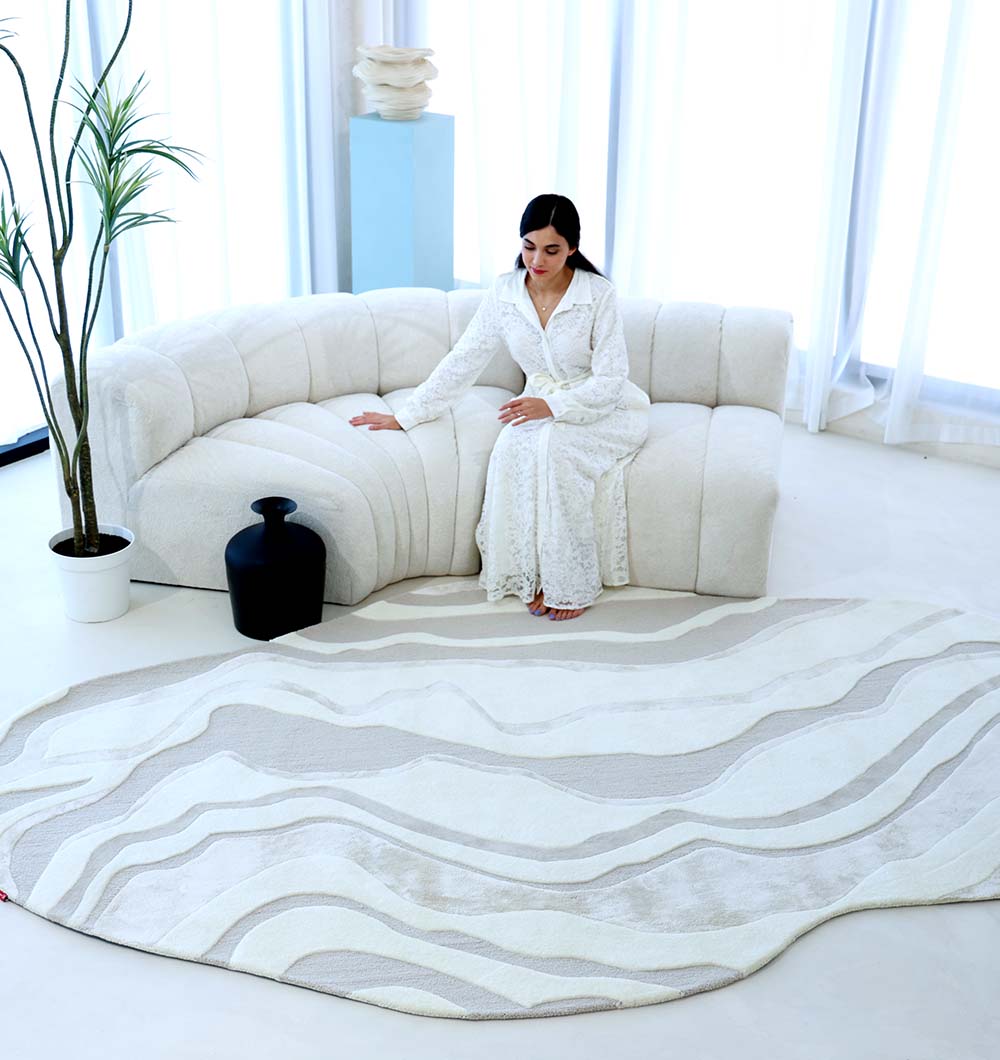
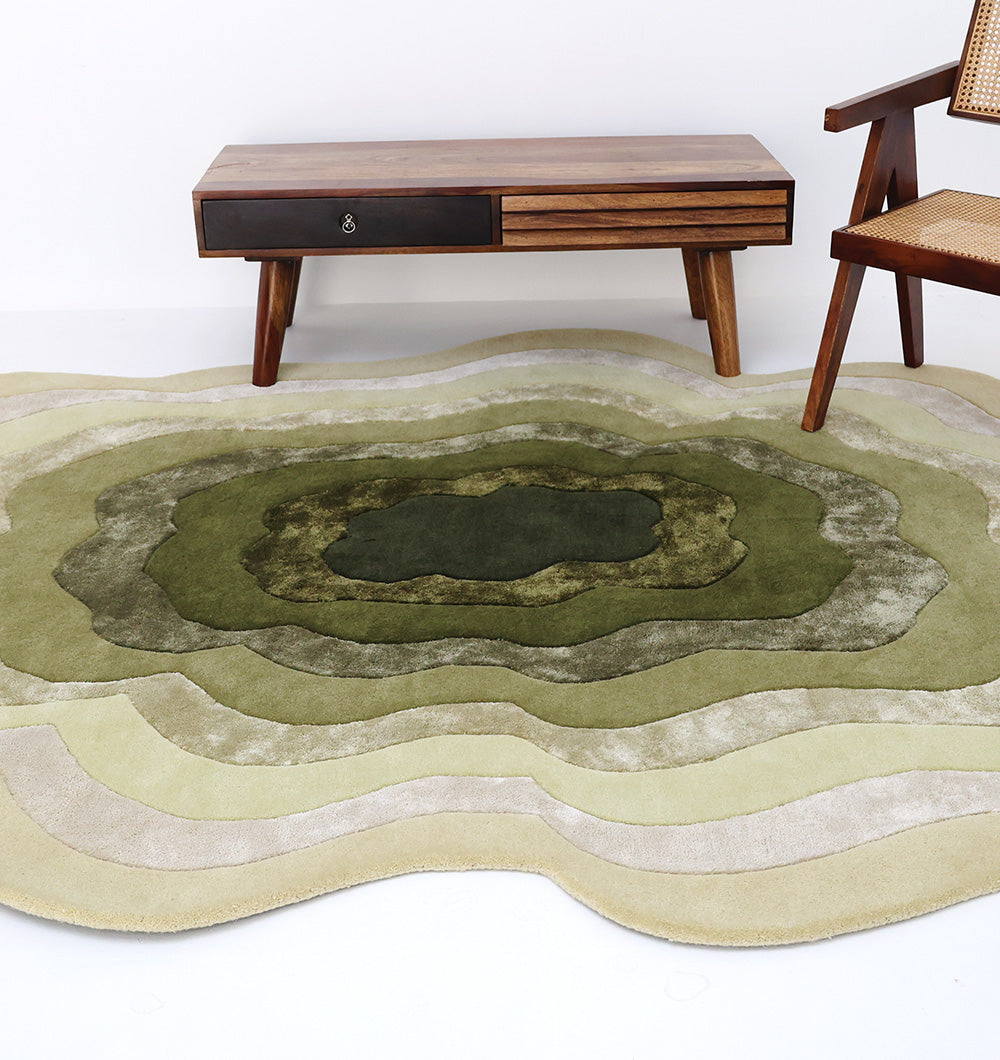
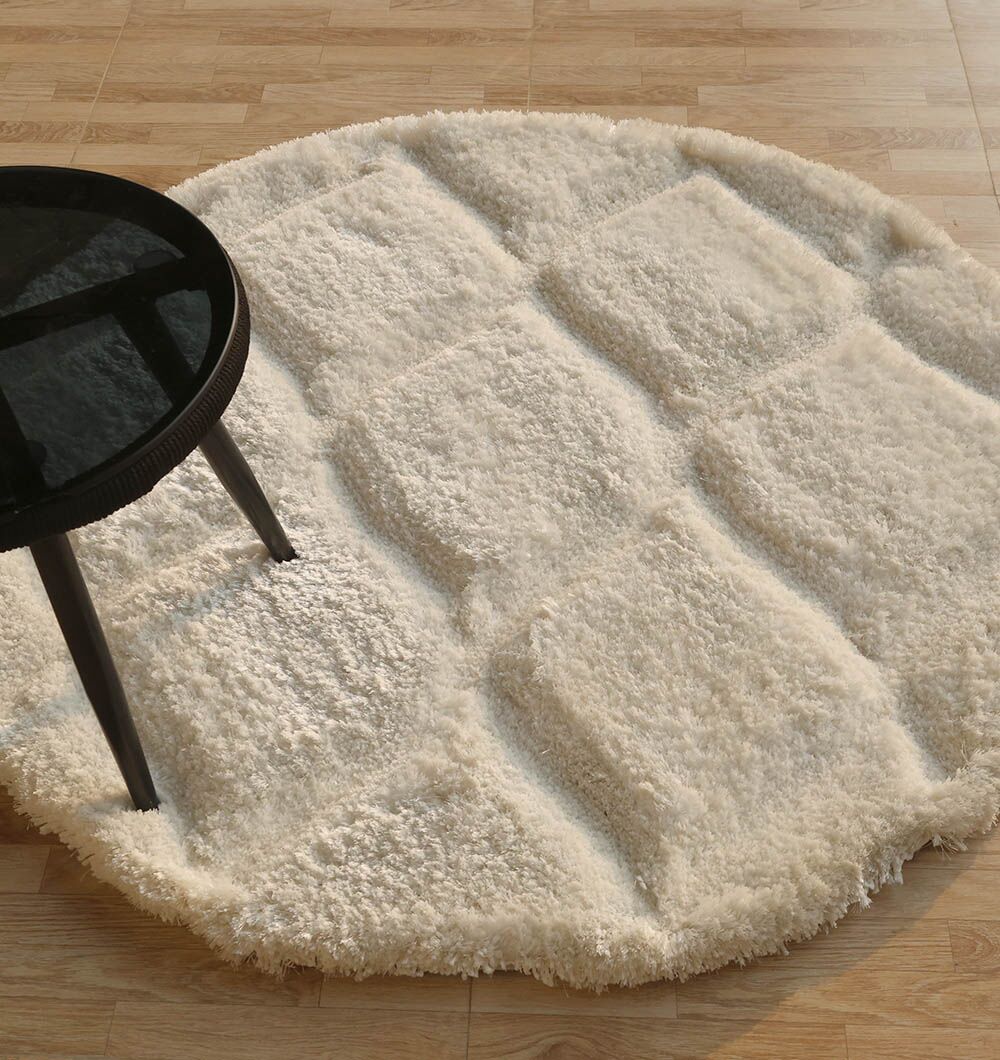
rectangle rugs work best in most rooms and furniture configurations, round rugs are ideal under round tables or in reading corners, oval or irregular rugs are good in rooms with curved chair or table arrangements or in rooms with unusual shapes.
When in between sizes, go up. When it comes to rugs, the rule of thumb is that it is better to be slightly bigger than slightly smaller.
The safest way to purchase rugs online?
Buying for rugs online, particularly at higher price ranges, calls for a little more work than shopping in the flesh:
See real photographs and video of the actual weave or the actual rug, rather than stock catalog images.
Inquire about return and trial policies. A confident seller will give you a trial period or a window for easy return - one of the most obvious indicators of a trustworthy carpet online seller.
Carefully read the material and construction description. The term "Handmade" should include hand knotted, hand tufted, or hand-loom; vague terms like "premium quality" with no construction detail should be a red flag.
Check for certifications and origin, as mentioned above.
Look at the reviews of verified buyers, particularly images of real homes, not just studio ones.
If ordering from a country outside of your country of origin, confirm delivery times and customs/import information.
If the rugs online seller hesitates to answer detailed questions regarding the knot count, dye process, and origin, be wary of them - they are not a reputable seller.
How Do You Care for and Maintain a Luxury Handmade Rug?
The key to protecting your investment is proper care:
Regular vacuuming of rugs is recommended, but beater bars should not be used on hand-knotted or silk rugs as they can pull and damage delicate fibers.
Turn the rug 6-12 months to ensure even wear from sunlight and foot traffic:
Quickly blot spills with a clean cloth (not rub, as it may spread the stain and can harm natural dyes).
Have a professional cleaning once every 1-2 years, particularly wool and silk items; home cleaning products can strip away natural dyes or harm fibers.
A rug pad will not slip, provide cushioning and protect your rug and flooring:
Where possible, limit direct exposure to intense sunlight, or use window film that blocks UV rays, as even good natural dyes will fade more quickly after years of constant direct sunlight.
A hand-knotted wool or silk rug can last for 25-50 years or more with this level of care, and will age in a way that is beneficial to the rug, as opposed to wearing it out over time.
Final Thoughts
One of the rare home items that improves over time when it's well made and well cared for is a luxury handmade rug. Get back to the basics: real hand-craftsmanship, honest certification, quality dyes, the correct size and material for your space and climate, and a seller who will be honest about it. If you get them right, the rug you purchase today could be enjoyed by your family for decades to come.
Frequently Asked Questions
What is the price of a true handmade rug?
Hand-knotted wool rugs are more expensive than machine-made rugs and hand-tufted rugs of similar size, due to the labor involved, although prices vary widely depending on the size, material and knot density of the rug. If the “handmade” rug is close to the price of a machine-made rug of the same size, then it is a good idea to double-check the construction claims before purchasing.
What are the differences between hand-knotted rugs and hand-tufted rugs?
Hand-knotted rugs are created by hand on a loom, and it takes weeks to months to create the highest quality and most expensive rugs. The tufting gun and latex-backed fabric base are used to make hand-tufted rugs, which are still handmade, but are quicker and less expensive than hand-tufted rugs.
How long do luxury handmade rugs last?
If maintained correctly, a hand-knotted wool or silk rug could last 25-50 years or even longer. Hand tufted rugs will last 10 to 15 years depending on the quality, and the quality will depend largely on the traffic and maintenance.
Are custom size or design rugs available?
Yes. Most luxury rug manufacturers have full customization options, allowing you to pick your rug size, shape, material, colour scheme and pattern. The time it takes to make custom hand-knotted rugs ranges from 2 to 6 months or more, depending on the size and complexity of the design.
Do luxury rugs increase in value over time?
Quality wool or silk rugs, particularly natural dyed, well documented and hand-knotted rugs, are likely to appreciate or maintain their value over decades. Value is based on the quality of the craftsmanship, material, rarity and condition (well cared for pieces hold value best).
What are the steps for home cleaning of a wool or silk rug?
Vacuum often, don't use a beater bar, blot up spills right away with a clean cloth and turn rugs over for even wear every 6-12 months. If you need a deep clean, hire a professional carpet cleaner that is familiar with handmade natural fibre carpets every 1-2 years and avoid home carpet cleaners as they can harm natural dyes and fibres.
Read the blog on Aiba World: Wool Rugs vs Cotton Rugs vs Silk Rugs: Which Material Is Best? |