0
0

Blog

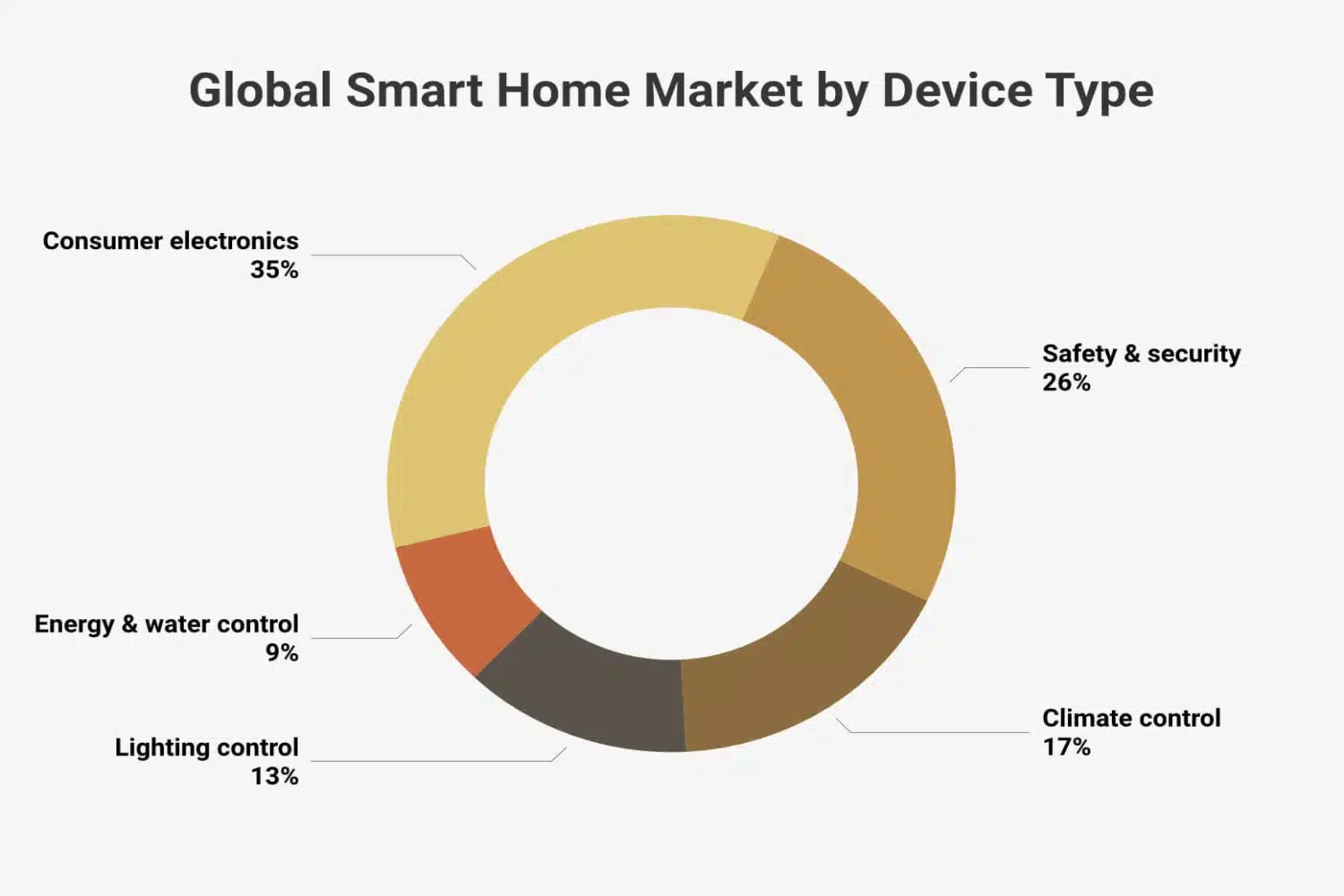
Smart home technology is changing the way people live. From lighting and security to appliances and entertainment, more homes are becoming connected and efficient.
As smart devices become easier to use and more affordable, millions of homeowners are choosing them for comfort, safety, and energy savings. Designers, architects, and developers are also adding smart features to create modern and sustainable spaces.
This statistical report presents important numerical insights and trends in the global smart home market, highlighting adoption patterns, consumer behavior, and the growth of connected living worldwide.
All statistics and data are collected from trusted online sources and supplemented by our extensive research. Data sources are attached at the end of the article.
Key Findings From Our Smart Home Statistics Report
- Nearly 260 million homes worldwide already use smart devices, showing how fast connected living has become a global norm.
- Smart features can raise home value by up to 10%, making them one of the strongest upgrades for property resale.
- 97% of smart home users report high satisfaction, proving that smart devices deliver real comfort and convenience.
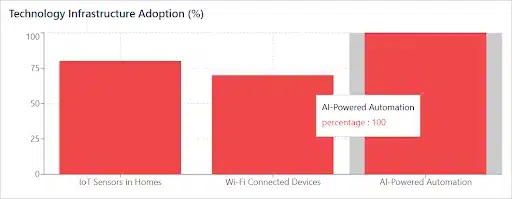
- More than 70% of smart devices run on Wi Fi, making strong internet connectivity essential for every smart household.
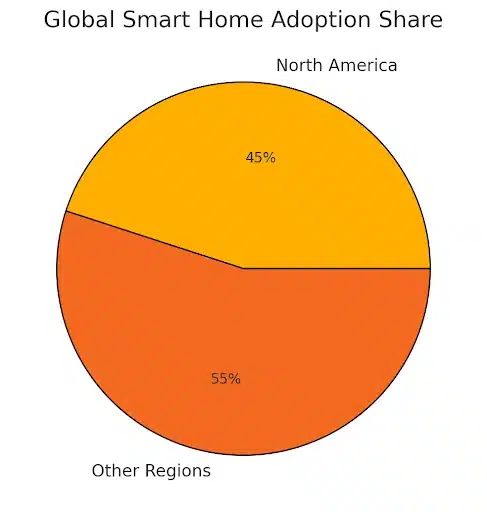
- North America leads with 45% of global smart home adoption, far ahead of other regions.
6. Smart security alone will cross USD 100 billion by 2030, driven by the rising use of connected cameras and smart locks.
7. 78% of home buyers are willing to pay more for smart homes, pushing developers to include smart features in new projects.
8. AI powers 100% of next-generation home automation systems, making smart homes more predictive and personalized.
9. Over 60% of smart homeowners use connected security devices, showing strong demand for safer and monitored environments.
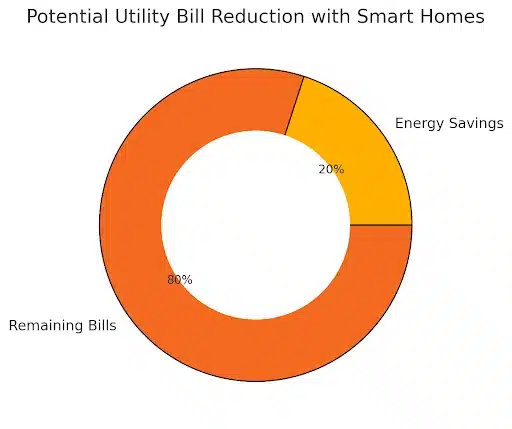
10. Smart homes can reduce utility bills by up to 20%, making energy savings one of the biggest benefits of connected systems.
Global Market Size and Long-Term Growth Trends
This part highlights how big the smart home market is today and where it is headed. It covers numbers on total market value, yearly growth, consumer spending, and long-term forecasts for devices, appliances, and security products.
- The global smart home market is set to reach USD 503.1 billion by 2032, showing strong long-term growth with a CAGR of 16.8%.
- Consumers around the world spent USD 127 billion on smart home devices in 2022, showing steady demand for connected products.
- The smart appliances market was valued at USD 44.25 billion in 2022, driven by higher use of connected kitchen and home devices.
- The smart security market is expected to cross USD 100 billion by 2030, as more homes adopt cameras, locks, and alarm systems.
- Global installations of smart home devices are projected to reach over 1 billion units by 2030, reflecting fast adoption of connected living.
Regional Smart Home Adoption Across Major Markets
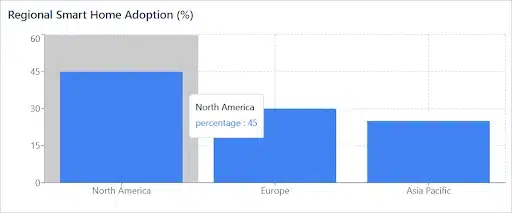
You can see how different regions use smart home technology. The data shows revenue from the U.S., adoption rates across North America, energy-efficient system usage in Europe, and fast expansion in the Asia-Pacific region.
- The U.S. smart home industry generated USD 31.45 billion in revenue in 2022, making it one of the strongest markets worldwide.
- North America holds 45% of global smart home adoption, showing the highest penetration of connected products.
- Europe represents 30% of energy efficient smart home systems, driven by strong sustainability rules and green building goals.
- The Asia Pacific region is the fastest growing market with 25% year-on-year adoption, as more consumers shift to smart devices.
Smart Household Penetration and Ownership Levels Worldwide
This section focuses on how many homes now use smart devices. It includes figures on global smart households, ownership pages, the number of connected devices in U.S. homes, and the share of condos and apartments in the market.
- There were 259.89 million smart households worldwide by 2021, making connected homes a major part of the housing sector.
- As of Q3 2022, 16.4% of people globally owned at least one smart home device, showing rising mainstream usage.
- The average smart home in the United States has eight connected devices, reflecting deep adoption of automation.
- Condominiums and apartments make up 57.3% of the smart home market, mainly due to built in smart features in modern residential projects.
- More than 60% of new housing projects include smart systems, showing that developers now treat smart features as standard.
Consumer Demographics and Smart Home Buying Behavior
Here you get a clear view of who buys smart home products and what matters to them. The statistics cover age groups, interest levels, willingness to pay more, satisfaction scores, privacy concerns, and the most preferred device categories.
- 78% of home buyers are willing to pay extra for smart home features, showing strong preference for connected living.
- Three out of four smart home consumers are under 55, making younger buyers the main audience for smart technology.
- 97% of smart home device owners report high satisfaction, proving that most users enjoy the benefits of automation.
- About two thirds of consumers have privacy concerns, especially around how companies handle personal data.
- Over 60% of smart homeowners use smart security devices like connected cameras and smart locks.
- More than half of smart home users rely on voice assistants such as Alexa, Google Assistant, or Siri for daily control.
- 78% of home buyers show interest in smart home features, influencing real estate decisions.
- 97% of existing smart device owners say their products meet their needs, confirming strong user trust.
Device Adoption Patterns and Everyday Usage Trends
This area explains which devices people rely on most in daily life. It shares numbers on smart switches, audio-video systems, garage door openers, energy and lighting tools, safety sensors, and the role of Wi-Fi and AI in automation.
- 62.5% of users control their devices through smart switches, making them one of the most common control tools in smart homes.
- Audio video products like smart TVs and speakers appear in 56% of smart homes, showing strong demand for entertainment devices.
- 13.8% of Americans own smart garage door openers, a niche but growing smart home category.
- Energy and lighting management systems are used in 15 to 21% of smart households, helping users cut energy waste.
- Smart smoke and carbon monoxide detectors rank among the top five safety devices, showing strong focus on home protection.
- More than 70% of smart home devices rely on Wi Fi connectivity, making it the main network backbone for connected living.
- AI and machine learning power all next-generation home automation systems, enabling faster, personalized, and predictive control.
Impact of Smart Home Features on Property Value and Utility Savings
This part shows how smart technology affects home value and monthly bills. It includes data on higher selling prices, reduced energy costs, and the use of IoT sensors for real-time energy tracking.
- Smart features can increase a home’s value by up to 10%, making connected homes more attractive during sales.
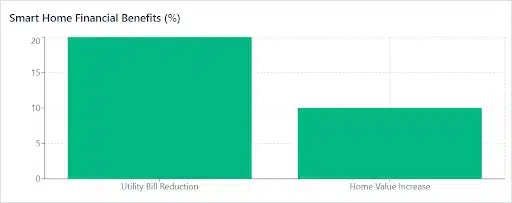
- Smart homes reduce utility bills by up to 20%, mainly through better control of lighting, heating, and appliances.
- IoT sensors are used in 80% of connected homes to track and manage energy usage in real time, supporting greener living.
الكلمات النهائية
Smart home technology is changing everyday life by making homes more comfortable, safe, and efficient. From lights and appliances to security and entertainment, everything can now be controlled easily through phones or voice commands.
As smart devices become cheaper and easier to use, more people are adding them to their homes. Builders, designers, and developers are also using these technologies to create modern and eco-friendly spaces.
With the help of AI and automation, future homes will be smarter, greener, and more connected, making daily living simpler and more enjoyable for everyone.
الأسئلة الشائعة
1. What is the current size of the global smart home market?
The global smart home market is valued in the hundreds of billions and is expected to reach USD 503.1 billion by 2032. This growth comes from rising demand for smart security, appliances, lighting, and AI-powered automation in homes.
2. How many households use smart home devices worldwide?
There are more than 259 million smart households worldwide. Global ownership continues to rise as connected devices become cheaper, easier to install, and more useful for everyday tasks like lighting, security, and entertainment.
3. Do smart home features increase property value?
Yes. Smart home features can increase property value by up to 10%. Buyers often prefer homes with built in smart security, energy control, and automation because these systems offer long term savings and convenience.
4. Which smart devices are used most in modern homes?
Smart switches, smart TVs, connected speakers, and security cameras are the most commonly used devices in smart homes. These products help people control lighting, entertainment, and safety through phones, apps, and voice assistants.
5. How much can smart home technology reduce utility costs?
Smart home technology can reduce energy bills by up to 20%. Automated lighting, smart thermostats, and IoT energy sensors help homeowners track usage and cut waste without changing their daily habits.
6. Are smart home users satisfied with their devices?
Yes. About 97% of smart home device owners report strong satisfaction. Users value the added comfort, remote control, time savings, and security benefits that smart products provide in daily life.
مصادر البيانات
- https://www.mordorintelligence.com/industry-reports/india-smart-home-market
- https://market.biz/smart-home-statistics/#smart-home-security-market-size
- https://market.us/report/smart-homes-market/
- https://market.us/report/smart-home-security-market/
- https://www.mordorintelligence.com/industry-reports/india-smart-home-market
- https://electroiq.com/stats/smart-home-statistics/

Article By
Asif Hasan
Asif Hasan is a recognized expert in textile artistry, global sourcing, and e-commerce growth within the hand-knotted rugs and carpets sector. As the CEO of منزل رامشا, he focuses on preserving traditional weaving techniques while implementing modern digital strategies to bring authentic, high-quality floor coverings from artisan workshops to global customers. He specializes in optimizing the carpet supply chain and ensuring the sustainable trade of premium home textiles.